
Introduction
In short, you can order food in China via QR code (the most common method), at the counter, or directly with a server. Most major chain restaurants offer English digital menus, and mobile payment is accepted almost everywhere. A basic translation app and a few key Chinese phrases will make the process much smoother.
For international travelers, ordering food is one of the most frequent and important daily tasks during a trip to China. Many first-time visitors worry about language barriers, unfamiliar dishes, and different dining customs.
This 2026 guide walks you through every standard ordering system in China, explains common cultural norms, and shares practical solutions to the most frequent problems foreigners face. Whether you are eating at a street stall, a local noodle shop, or a sit-down restaurant, you will have clear steps to follow.
What You Need to Know Before You Start
Common Ordering Methods in 2026
QR code ordering (扫码点餐 sǎomǎ diǎncān) is the dominant method across the country, used at everything from small neighborhood eateries to large national restaurant chains. You scan a sticker on the table with WeChat or Alipay, browse a digital menu, select dishes, and pay directly inside the app.
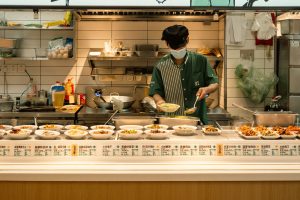
Counter ordering is standard at fast food chains, noodle shops, breakfast stalls, and street food stands. You order and pay first, then wait for your number to be called to pick up your food.
Table service with a paper menu is still common at traditional restaurants, high-end venues, and family-run eateries in less touristy areas. This method relies more on direct communication with servers.
What Foreign Travelers Should Prepare
- A working mobile payment account (Alipay or WeChat Pay) — accepted at nearly all restaurants. For step-by-step setup, see our guide on using Alipay in China.
- A translation app with camera OCR to read paper menus and ingredient lists. For top tool recommendations, see our essential apps for China travel.
- A short list of basic Chinese food phrases to state preferences like spice level or dietary restrictions.
- A small amount of cash as a backup for very small stalls or technical failures.
Step-by-Step Ordering Guide
Method 1: QR Code Ordering (Most Widely Used)
- Locate the QR code sticker on your table, placemat, or table number stand.
- Scan the code using WeChat or Alipay. The digital menu will open automatically within the app.
- Look for a language toggle (usually marked “English” or “EN”) in the top corner of the menu page. Most major chain brands support an English interface.
- Browse food categories and select dishes. Most digital menus include photos, prices, and short ingredient descriptions.
- Add special instructions if the option is available, such as less spice, no cilantro, or extra rice.
- Confirm your order and complete payment directly through the app.
- Dishes will be brought to your table when ready. You can check real-time order status on the digital menu page.
Method 2: Counter or Street Stall Ordering
- View the menu board above the counter or the display case with sample dishes. Photos are available for almost all popular items.
- Point to the items you want, or say the dish name if you know it.
- Pay at the counter using mobile payment, cash, or a bank card if accepted.
- Take your printed receipt or number ticket and wait nearby for your order.
- Pick up your food when your number is displayed on a screen or called out by staff.
Method 3: Ordering With a Server at Sit-Down Restaurants
- Be seated and wait for the server to bring a paper menu (菜单 càidān).
- Mark dishes with a pencil if order sheets are provided, or point directly to items on the menu.
- Clearly state any dietary requirements or flavor preferences. Simple phrases or a translation app work well for this.
- Confirm the total number of dishes and portion sizes with the server before finalizing.
- Pay at the end of the meal, either by calling the server over or paying at the front counter on your way out.
Understanding Payment Timing
Different types of restaurants in China follow different payment sequences:
- Pay first, eat later: Common at fast food chains, food courts, noodle shops, and street stalls. You order and pay at the counter, then wait for your food.
- Eat first, pay later: Standard at sit-down restaurants, hot pot venues, and higher-end dining. You are seated, served, and pay at the end—either by asking the server for the bill (买单 mǎidān) or walking to the front counter.
- QR code ordering: Payment happens immediately when you submit your order in the app. Dishes are then prepared and served to your table.
If you are unsure which system a restaurant uses, observe what other customers are doing, or ask the staff.
Common Problems and Solutions
Language Barriers and Unfamiliar Dishes
Most small local restaurants do not have English menus, and front-of-house staff may not speak English. This is one of the biggest challenges for foreign visitors.
- Use the camera translation feature on your phone to scan paper menus and read dish names and main ingredients.
- If the digital menu has no English option, ask if a physical menu with English is available. Many mid-range and higher-end restaurants keep a printed English menu, even when their QR code system is Chinese-only. Use the phrase “有英文菜单吗?” (yǒu yīngwén càidān ma? — “Do you have an English menu?”).
- Point to photos on the menu or to food on nearby tables. This is widely accepted and very common in China.
- Look for picture menus or plastic food displays at the restaurant entrance.
- Stick to widely recognized staple dishes if you are unsure, such as noodles (面 miàn), rice bowls (饭 fàn), or dumplings (饺子 jiǎozi).
Spice Levels and Dietary Restrictions
Many regional Chinese cuisines are heavily spiced, and full ingredient lists are not always printed on menus.
- Ask for 微辣 (wēilà, mild spice) or 不辣 (bù là, no spice) when placing your order. Note that “mild” in Chinese cooking may still be spicier than what many international visitors are used to.
- If you have serious food allergies or strict dietary requirements, prepare a card or phone note with your restrictions written clearly in Chinese before your trip. Show this to the server before ordering, even when using a digital menu.
- Common allergens like peanuts, seafood, soy, and gluten are widely used in Chinese cooking and may not be listed on menus. Do not assume a dish is free of an ingredient simply because it is not visible in the photo or description.
- For vegetarian and vegan travelers, the phrases 我吃素 (wǒ chī sù, “I eat vegetarian”) and 我不吃肉 (wǒ bù chī ròu, “I do not eat meat”) are useful. Strict vegan options remain limited outside major international cities. Buddhist temple restaurants (寺庙素菜馆 sìmiào sùcài guǎn), often located near or inside temple complexes, are among the most reliable choices for high-quality, affordable vegetarian meals.
Portion Sizes and Shared Dining Culture
Chinese meals are traditionally served family-style, with dishes placed in the center of the table for everyone to share. This is fundamentally different from Western individual-plate service.
How much to order: As a general rule, order roughly the same number of dishes as there are people in your group, plus one soup or extra dish. For a group of four, order four to five dishes total—not four individual main courses. If your group includes light eaters or you plan to order filling staples like noodles or fried rice, reduce by one dish to avoid waste.
Small and large portions: Many restaurants now offer dishes in two sizes—small (小份 xiǎo fèn) and large (大份 dà fèn). If you are dining alone or in a small group, choosing small portions allows you to try more variety without wasting food. Check the menu or ask the server if different sizes are available.
In traditional dining culture, serving food to elders and guests from shared plates is a sign of respect and care. In modern practice, especially in larger cities, many restaurants provide serving chopsticks (公筷 gōngkuài) or serving spoons (公勺 gōngsháo) specifically for this purpose.
If your host serves you food using these shared utensils, accept it graciously—they are showing hospitality. If you have concerns about hygiene, it is perfectly acceptable to use the serving utensils provided. If no serving utensils are on the table, you may politely decline with a smile or use the reverse end of your own chopsticks to take food from shared plates.
Real-Life Practical Tips
- Peak dining hours are 12:00–13:30 for lunch and 18:00–20:00 for dinner. Popular restaurants may have long wait times during these windows.
- Queuing systems vary: Popular local restaurants may have different waiting systems. Some use digital queuing kiosks or QR codes at the entrance where you register and receive a number—track your position on your phone. Others rely on physical lines outside the door. Observe what locals are doing and follow suit. During peak hours, expect waits of 30 minutes or more at the most popular spots.
- Free hot tea or hot water is commonly served as soon as you sit down at most sit-down restaurants. Cold drinks, including bottled water, soft drinks, and beer, must be ordered separately.
- Most Chinese restaurants do not serve ice water (冰水 bīngshuǐ), even upon request. If you prefer cold beverages, order bottled mineral water (矿泉水 kuàngquánshuǐ), which is widely available, or soft drinks from the menu.
- In many casual and mid-range restaurants, tableware is self-service. You will find clean bowls, plates, and chopsticks in a sterilizer cabinet (消毒柜 xiāodú guì) near the dining area. Take what you need and bring them to your table. Disposable chopsticks (一次性筷子 yīcìxìng kuàizi) are also commonly available—simply break them apart before use.
- If you are not comfortable using chopsticks, most mid-range and higher-end restaurants can provide a fork and spoon (叉子和勺子 chāzi hé sháozi) upon request, usually free of charge. In very small local eateries, this may not be available, so consider carrying a portable fork if needed.
- Service speed varies by restaurant type: Fast food chains and noodle shops serve food within minutes. Made-to-order dishes at sit-down restaurants—especially those cooking from scratch—take longer, particularly during peak hours. If you are short on time, choose quick-service venues or simpler dishes. If you have time to spare, traditional restaurants offer a more leisurely dining experience.
- Takeaway vs. dine-in: At fast food chains like KFC and McDonald’s, the pickup counter is often divided into separate sections for dine-in (堂食 tángshí) and takeaway (外带 wàidài). Make sure you are in the correct line to avoid confusion.
- Tipping is not expected or standard practice in China. Leaving extra money is not required and may confuse staff or be politely returned.
- For street food, follow the local crowds. Long lines almost always mean good quality and fresh, safe food.
Common Mistakes to Avoid
- Assuming foreign credit cards work everywhere. Mobile payment is universal, and cards are rarely accepted at small local restaurants and street stalls.
- Overordering by Western individual-portion standards. Chinese dishes are designed for sharing, and ordering one full entree per person will almost always result in too much food.
- Expecting all servers to speak English outside of major tourist areas and international chain brands.
- Taking photos of other diners, kitchen staff, or food preparation areas without permission. Photographing your own food is completely fine.
- Rushing the meal. Dining in China is often seen as a social activity, and service pace is slower than at Western fast food restaurants.
Useful Chinese Words
- 菜单 (càidān) — menu
- 扫码点餐 (sǎomǎ diǎncān) — QR code ordering
- 微辣 (wēilà) — mild spice
- 不辣 (bù là) — no spice
- 小份 (xiǎo fèn) — small portion
- 大份 (dà fèn) — large portion
- 公筷 (gōngkuài) — serving chopsticks
- 米饭 (mǐfàn) — white rice
- 矿泉水 (kuàngquánshuǐ) — bottled mineral water
- 堂食 (tángshí) — dine-in
- 外带 (wàidài) — takeaway
- 买单 (mǎidān) — get the bill / check please
- 谢谢 (xièxie) — thank you
Frequently Asked Questions
Do most restaurants in China have English menus?
Major chain restaurants, hotels, and venues in popular tourist areas usually have English menus or English-language QR code interfaces. Most small local restaurants, street food stalls, and eateries in residential neighborhoods do not. A camera translation app is the most reliable tool for reading untranslated menus.
Can I pay with cash at Chinese restaurants?
Yes. Under national regulations effective February 2026, all businesses in China are legally required to accept RMB cash. This means cash is always available as a backup payment method, even at the smallest street stalls. However, mobile payment is significantly faster and more convenient for everyday use. We recommend carrying a small amount of cash for emergencies or at very small vendors where digital systems may occasionally fail.
Is tipping expected in Chinese restaurants?
No, tipping is not a standard practice in China and is generally not expected. Most restaurants include service in the listed meal price. Leaving a tip may confuse the staff or be politely refused.
How do I ask for the bill in China?
You can say 买单 (mǎidān) to your server, or make a quick writing gesture in the air. At QR code restaurants, you pay directly on your phone and do not need to request a separate bill. At many sit-down restaurants, you can also walk to the front counter and pay on your way out.
Are vegetarian options easy to find in China?
Basic vegetable and tofu dishes are available at almost all restaurants. However, strict vegan or allergen-free options can be limited outside major international cities. It helps to have your dietary restrictions written clearly in Chinese to show your server. Buddhist temple restaurants are a reliable choice for high-quality vegetarian meals.
Conclusion
Ordering food in China is straightforward once you understand the standard systems and basic cultural norms. QR code ordering has greatly simplified the process for international visitors, even without fluent Chinese language skills.
Before your trip, set up mobile payment and download essential travel apps to make every part of your dining experience smooth and stress-free.
For more practical China travel guides, see our articles on WeChat Pay for foreigners, must-have travel apps, and traveling by high-speed rail.
- If you wish to further improve your Chinese reading ability, feel free to explore our Progressive Chinese Reading section.
- If you want to enhance your daily and business listening and communication skills, check out our Practical Chinese Listening resources.
- If you are interested in learning more general knowledge and practical content about China beyond business topics, visit our Premium Chinese Materials page.
Disclaimer: This guide is for informational purposes only and does not constitute legal, financial, or investment advice. While we strive to provide accurate and up-to-date information, laws and policies change frequently, and we cannot guarantee the accuracy of all content. International investors should always consult with qualified legal, financial, and tax professionals before making any business decisions in China.