Introduction
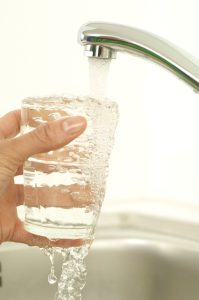
Tap water in China follows the mandatory national standard GB 5749-2022, which sets 97 water quality indicators. The water is treated to be safe for human contact. However, most Chinese cities do not recommend drinking tap water directly without boiling. Hotels often provide bottled water, and convenience stores sell bottled water at low prices. This guide explains the actual situation, what locals do, and what you should do as a foreign traveler.
You will learn about China’s water quality standard, whether hotel tap water is safe after boiling, how to choose bottled water, and what to do in different regions.
Quick Answer
Tap water in China meets the national standard GB 5749-2022, but most cities do not recommend drinking it directly without boiling. Locals typically boil water before drinking. Hotels often provide free bottled water, but this is a commercial practice, not a legal requirement. Bottled water is widely available and inexpensive. For most travelers, the safest approach is to drink boiled water or bottled water, and to use tap water for brushing teeth and washing fruit.
What Is China’s Tap Water Quality Standard?
The National Standard: GB 5749-2022
China’s current drinking water standard is GB 5749-2022, issued by the National Health Commission and approved by the State Administration for Market Regulation. It took effect on April 1, 2023, and is a mandatory national standard. It covers 97 water quality indicators, including 43 regular indicators and 54 extended indicators. Compared with the previous 2006 version, it removed 13 old indicators and added 4 new ones, including perchlorate.
What the Standard Covers
The standard sets limits for microbial indicators, heavy metals, organic matter, and disinfection byproducts. Key limits include: total bacterial count ≤100 CFU/mL, total coliform bacteria should not be detected, E. coli should not be detected, turbidity ≤1 NTU, color ≤15 units, permanganate index ≤3 mg/L, and arsenic ≤0.01 mg/L. As of 2026, the standard is the current mandatory national standard.
What the Standard Does Not Mean
Meeting GB 5749-2022 means the water is safe for human contact and consumption. It does not mean every city recommends direct drinking. China’s official guidance still recommends boiling water before drinking for most residents and visitors. The standard ensures safety at the treatment plant and in the distribution network, but aging pipes and secondary water supply in older buildings can affect end-point quality.
Why Do Chinese People Boil Water?
Official Recommendation
China’s National Health Commission recommends drinking boiled water or light tea as part of a healthy lifestyle. Official guidance states that bringing water to a full boil for 3 to 5 minutes kills pathogens, viruses, and parasites, and helps remove residual chlorine. This is the standard practice in most Chinese households.
What Boiling Achieves
Boiling does three things. First, it kills bacteria, viruses, and parasites. Second, it removes residual chlorine, improving taste. Third, it makes water safe even if there is minor contamination in the pipe network. After boiling, the water can be stored in a clean container and drunk once it cools to a comfortable temperature.
When Boiling Is Not Necessary
Some districts have achieved direct drinking water standards. Shenzhen’s Yantian District achieved district-wide direct drinking water in 2019, and other areas are gradually following. If you are in a direct-drinking district, tap water meets higher standards and can be consumed directly. For most travelers, however, boiling is still the recommended default.
What About Hotel Drinking Water?
Bottled Water in Hotels
Chain and star-rated hotels in China commonly provide 1 to 2 bottles of bottled water per room free of charge. This is a commercial practice, not a legal requirement. Many economy hotels, guesthouses, and hostels no longer provide free bottled water. If you need more, ask the front desk. Larger hotels usually provide additional bottles at no charge, while smaller ones may charge a fee.
Hotel Tap Water
Hotel tap water follows the same GB 5749-2022 standard. Boiling it makes it safe to drink. Most mid-range and star-rated hotels provide an electric kettle in the room. If you are unsure about the kettle’s cleanliness, boil a full kettle of water and discard it before using it for drinking water. As of 2026, there is no national mandatory standard for hotel kettle cleaning, so a quick rinse-and-boil is a reasonable precaution.
Minibar and Paid Water
Water with a price tag in the minibar is charged if consumed. Water labeled as complimentary is free. In 2026, market regulators reported that nearly 20 percent of accommodation complaints involved unclear minibar charges. Check the label before drinking. If unsure, call the front desk and ask 这瓶水免费吗 (zhè píng shuǐ miǎnfèi ma, “is this bottle of water free?”).
Hotels Without Kettles
Some economy hotels, guesthouses, and hostels may not provide a kettle. In that case, buy bottled water from a nearby convenience store or ask the front desk for hot water. Most hotels can provide hot water on request, even if there is no kettle in the room.
How to Choose Bottled Water in China
Three Official Categories
China classifies bottled water into three main categories: natural mineral water (饮用天然矿泉水), purified water (饮用纯净水), and other drinking water (其他饮用水). Natural mineral water must meet GB 8537-2018. Purified water and other drinking water follow GB 19298-2014. Natural mineral water contains naturally occurring minerals and is suitable for daily drinking. Purified water has had minerals removed and is not recommended as the only source of drinking water long-term.
Common Brands and Prices
Common brands include Nongfu Spring, C’estbon, Wahaha, Master Kong, and Ganten. Prices are low: convenience stores charge 2 to 5 RMB per bottle, supermarkets 1.5 to 3 RMB, and tourist areas 5 to 10 RMB. Common sizes include small bottles of 330 to 380 ml, medium bottles of 500 to 550 ml, large bottles of 1.5 to 2 liters, and bulk containers of 5 liters or 18.9 liters.
Where to Buy
Bottled water is available at convenience stores, supermarkets, vending machines, and through food delivery apps. Convenience stores are the most common option and are usually open 24 hours. If you are staying in a hotel, the nearest convenience store is often within walking distance. You can also order bottled water through Meituan or other delivery apps if you have set up payment.
Quality and Regulation
Bottled water is subject to regular market supervision and random inspections. As of 2026, regulators continue to test bottled water for compliance with national standards. Buying from established convenience stores and supermarkets reduces the risk of counterfeit products. Avoid buying from unlicensed street vendors if the packaging looks damaged or the label is unclear.
Do You Need to Bring a Kettle or Filter?
Portable Kettles
Most travelers do not need to bring a portable kettle. Mid-range and star-rated hotels usually provide one. If you are staying in budget accommodation and want to be prepared, a small travel kettle is lightweight and easy to pack. China uses 220V and 50Hz, and most travel kettles support 100–240V, so they work without a converter. You may need a plug adapter for Type A, C, or I outlets.
Portable Filters
Portable filters are not necessary for most travelers. Bottled water is widely available and inexpensive. If you are traveling to remote areas or have specific water quality concerns, a portable filter can be useful, but it is not a standard travel item for China. Water hardness in central China is around 80–150 mg/L, which is moderately hard. This is not a health risk, but it can cause scale in kettles. White vinegar or citric acid can be used to clean scale.
Water Hardness and Scale
Scale in kettles is mainly calcium carbonate and magnesium carbonate, natural mineral deposits from hard water. Scale itself is not harmful to health. If you see white deposits in a kettle, it is a sign of hard water, not contamination. Cleaning with white vinegar or citric acid is a common household practice.
Does Water Quality Differ by Region?
Major Cities
Beijing publishes monthly water quality test results. Shanghai publishes quarterly results. Shenzhen’s Yantian District achieved district-wide direct drinking water in 2019, and other districts are gradually improving. First-tier cities generally meet GB 5749-2022 at the treatment plant, but end-point quality in older buildings can vary.
North vs. South
Northern China generally has harder water, while southern China has softer water. This affects taste and scale but not safety. Both regions follow the same national standard. Travelers may notice a difference in taste, but it does not indicate a safety issue.
High-Altitude and Rural Areas
In high-altitude regions such as Tibet, Qinghai, and parts of Yunnan, boiling water is especially important because water may boil at a lower temperature due to altitude. In rural areas, as of the end of 2025, China’s rural tap water coverage reached 96 percent, with a goal of 97 percent by 2026. However, rural water treatment and distribution may vary more than in cities. Travelers in rural or remote areas should prioritize bottled water or boiled water.
Coastal and Industrial Areas
Coastal cities monitor for seawater intrusion. Industrial areas have additional monitoring for specific contaminants. Tourist cities follow the national standard. In remote scenic areas, bottled water or boiled water is recommended. As of 2026, the new Water Supply Regulations (国务院令第831号), effective June 1, 2026, unify urban and rural water supply management and strengthen whole-chain supervision.
Health Risks and Official Advice
Is There a Risk of Stomach Upset?
Drinking unboiled tap water may cause stomach upset because of residual bacteria or pipe contamination. Boiling for 3 to 5 minutes kills pathogens and makes water safe. The national standard requires total coliform and E. coli to be absent, but secondary contamination in the distribution network cannot be fully ruled out. Boiling is the simplest precaution.
What About Brushing Teeth and Washing Food?
Tap water is suitable for brushing teeth and washing fruits and vegetables. It is not recommended to drink large amounts of unboiled tap water. For brushing, rinse with tap water and spit it out; you do not need to use bottled water. For washing fruit, tap water is fine. For drinking, use boiled or bottled water.
What About Ice?
Ice in restaurants and hotels is often made from boiled or filtered water, but not always. If you have a sensitive stomach, avoid consuming large amounts of ice from unknown sources. If you are concerned, ask for drinks without ice. In Chinese, say 去冰 (qù bīng, “no ice”).
Baby Formula and Special Needs
For baby formula, use tap water that has been fully boiled and then cooled. Do not use unboiled tap water. If you are traveling with an infant, bring a travel kettle or ask the hotel for boiled water. For medical conditions requiring specific water quality, consult your doctor before traveling.
If You Feel Unwell
If you experience abdominal pain, diarrhea, or other symptoms after drinking water, call 120 for medical assistance. For consumer complaints, call 12315. For immigration or visa questions, call 12367. For more on buying medicine in China, see our guide on How to Buy Medicine in China as a Foreigner.
Common Problems and Solutions
You Are Not Sure If Hotel Water Is Safe
- Cause: Hotels may not label water clearly, and tap water is not recommended for direct drinking.
- Solution: Use the hotel kettle to boil water, or drink bottled water. If there is no kettle, ask the front desk for hot water. Most hotels can provide it.
You Cannot Find Bottled Water
- Cause: You may be in a remote area or arriving late at night.
- Solution: Convenience stores are common in cities and many are open 24 hours. If none are available, ask the hotel for bottled water or hot water. Ordering through a delivery app is also an option if you have set up mobile payment.
You Are Worried About the Kettle
- Cause: There is no national mandatory cleaning standard for hotel kettles.
- Solution: Boil a full kettle of water and discard it before using it for drinking water. This simple step reduces concern. If you prefer, bring a small travel kettle.
Real-Life Tips
- Drink boiled water or bottled water. Tap water is fine for brushing teeth and washing fruit.
- Hotels often provide 1–2 free bottles of water. Check the label to see if it is complimentary or paid.
- Convenience stores sell bottled water at 2–5 RMB. Supermarkets are cheaper.
- Boiling water for 3–5 minutes is the standard practice in Chinese households.
- Scale in kettles is harmless. Clean with white vinegar or citric acid if needed.
- In remote or high-altitude areas, prioritize bottled water or boiled water.
- If you are not sure about ice, ask for 去冰 (no ice).
- Carry a small bottle of water when sightseeing; refill from hotel kettle or buy at convenience stores.
- For baby formula, use fully boiled and cooled water.
Common Mistakes to Avoid
- Don’t drink unboiled tap water, even if it looks clear.
- Don’t assume all hotels provide free bottled water; check the label or ask.
- Don’t use bottled water for brushing teeth; tap water is fine.
- Don’t worry about scale in kettles; it is not a health risk.
- Don’t skip boiling in rural or high-altitude areas.
- Don’t drink from unknown sources without boiling or filtering.
Useful Chinese Phrases
- 开水 (kāishuǐ) — boiled water
- 瓶装水 (píngzhuāng shuǐ) — bottled water
- 烧水壶 (shāoshuǐhú) — electric kettle
- 这瓶水免费吗?(zhè píng shuǐ miǎnfèi ma?) — is this bottle of water free?
- 请给我热水 (qǐng gěi wǒ rèshuǐ) — please give me hot water
- 去冰 (qù bīng) — no ice
- 可以直饮吗?(kěyǐ zhíyǐn ma?) — is it safe to drink directly?
- 矿泉水 (kuàngquánshuǐ) — mineral water
Frequently Asked Questions
Is tap water safe to drink in China?
Tap water in China meets the mandatory national standard GB 5749-2022, but most cities do not recommend drinking it directly without boiling. Boiling for 3–5 minutes kills pathogens and makes water safe. For most travelers, boiled water or bottled water is the recommended choice. Tap water is fine for brushing teeth and washing fruit.
Do hotels in China provide bottled water?
Chain and star-rated hotels commonly provide 1–2 free bottles per room. This is a commercial practice, not a legal requirement. Economy hotels, guesthouses, and hostels may not provide free bottled water. Water with a price tag in the minibar is charged if consumed. If you are unsure, ask the front desk.
Can I drink hotel tap water after boiling?
Yes. Hotel tap water follows GB 5749-2022. Boiling it makes it safe to drink. Most mid-range and star-rated hotels provide an electric kettle. If you are concerned about kettle cleanliness, boil a full kettle and discard it before using it for drinking water. As of 2026, there is no national mandatory cleaning standard for hotel kettles.
What bottled water should I buy in China?
China classifies bottled water into natural mineral water, purified water, and other drinking water. Natural mineral water contains naturally occurring minerals and is suitable for daily drinking. Purified water has had minerals removed and is not recommended as the only source. Common brands include Nongfu Spring, C’estbon, and Wahaha. Prices are 1.5–5 RMB at convenience stores and supermarkets.
Conclusion
Tap water in China meets national safety standards, but boiling is the recommended practice for most travelers. Hotels often provide bottled water, and convenience stores sell it cheaply. Tap water is fine for brushing teeth and washing fruit. In remote or high-altitude areas, prioritize bottled or boiled water. For more on health and packing, see our guides on How to Buy Medicine in China, China Travel Packing List, and China Customs for Tourists.
- Improve your real-world Chinese communication skills with our Practical Chinese Listening resources.
- Build your reading proficiency with our Progressive Chinese Reading section.
- Master travel-specific phrases and dialogues in our Travel Chinese collection.
- Get personalized one-on-one instruction with our Premium Chinese Live Courses.
- Prepare for long-term stays in China with our Premium China Resources and survival materials.
Travel regulations, app policies, visa requirements, and payment services in China may change over time. Always verify important information through official sources before making travel decisions.