
This guide reflects the situation as of October 2026. Food culture is stable, but specific dishes and prices may vary by city and season.
Introduction
Chinese food is not one cuisine. It is a collection of regional cooking traditions that differ in ingredients, flavor, and technique. Understanding a few basics before you travel makes it easier to choose what to eat, read a menu, and enjoy meals without confusion. This guide explains the eight great cuisines, the main regional differences, common ingredients, breakfast and street food, and basic dining etiquette.
It is written for first-time travelers who want to understand Chinese food as a system, not just a list of dishes. For the practical mechanics of ordering, see our separate guide on how to order food in China.
Quick Answer
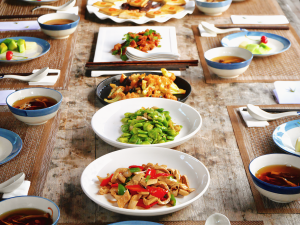
China has eight widely recognized regional cuisines: Shandong, Sichuan, Cantonese, Jiangsu, Fujian, Zhejiang, Hunan, and Anhui. The biggest practical divide is north versus south: wheat and noodles in the north, rice in the south. Spiciness varies by region. Sichuan uses numbing pepper and chili, Hunan uses fresh chili, and Guangdong focuses on fresh, mild flavors. Breakfast and street food are regional and inexpensive. Most meals are shared, and ordering a mix of cold dishes, hot dishes, and staple food is normal.
What Are the Eight Great Cuisines of China?
The Traditional Framework
The eight great cuisines, or 八大菜系 (bā dà càixì), are the most widely recognized regional cooking traditions in China. They are based on geography, local ingredients, cooking techniques, and eating habits. This framework is a cultural classification, not a government standard. It is the version most Chinese people recognize and the one most useful to travelers.
The Eight Cuisines at a Glance
- Shandong Cuisine (鲁菜, lǔ cài) — Savory and fresh, known for seafood, soups, and offal dishes. Representative dishes include braised sea cucumber with scallion and sweet-and-sour carp.
- Sichuan Cuisine (川菜, chuān cài) — Numbing and spicy, with many flavor profiles. Representative dishes include Kung Pao chicken, fish-fragrant shredded pork, and mapo tofu.
- Cantonese Cuisine (粤菜, yuè cài) — Fresh, light, and focused on natural flavors. Known for roast meats, dim sum, and seafood. Representative dishes include roast suckling pig and sweet-and-sour pork.
- Jiangsu Cuisine (苏菜, sū cài) — Refined and slightly sweet, with braising and stewing techniques. Huaiyang cuisine, a branch of Jiangsu cuisine, is often used for state banquets. Representative dishes include squirrel-shaped mandarin fish and Nanjing salted duck.
- Fujian Cuisine (闽菜, mǐn cài) — Known for seafood, red yeast rice seasoning, and soup-making. Representative dish: Buddha Jumps Over the Wall.
- Zhejiang Cuisine (浙菜, zhè cài) — Fresh, tender, and light. Representative dishes include West Lake vinegar fish and Dongpo pork.
- Hunan Cuisine (湘菜, xiāng cài) — Hot and savory, using fresh chili and smoked meats. Representative dish: chopped chili fish head.
- Anhui Cuisine (徽菜, huī cài) — Hearty and rich, using ham for flavor and rock sugar for freshness. Representative dish: Anhui stinky mandarin fish.
What the Eight Cuisines Do Not Cover
The eight cuisines are not a complete map of Chinese food. Beijing cuisine, Northeastern cuisine, Jiangxi cuisine, Hubei cuisine, Henan cuisine, and Hakka cuisine are all important regional traditions that sit outside the eight-cuisine framework. In 2018, the China Cuisine Association published a separate list of 34 provincial-level regional cuisines and 340 classic dishes. That list is an industry research project, not a replacement for the eight-cuisine framework. Travelers will encounter both systems, and neither is wrong.
What Are the Main Regional Differences?
North vs. South
The most basic divide in Chinese food is between the wheat-eating north and the rice-eating south. In the north, staple foods include noodles, steamed buns, dumplings, and flatbreads. In the south, rice and rice noodles dominate. This difference shapes almost every meal, from breakfast to dinner.
Spiciness by Region
Spiciness is not one flavor. It varies significantly by region. Sichuan cuisine uses both chili and Sichuan pepper, creating a numbing and spicy sensation. Hunan cuisine uses fresh chili and is often described as purely hot rather than numbing. Guizhou cuisine leans toward sour and spicy. If you are sensitive to spice, Cantonese, Jiangsu, Zhejiang, and Fujian cuisines are the mildest options. For more on regional food in a specific city, see our guide on How to Visit Chengdu as a First-Time Traveler.
Light and Mild Traditions
Guangdong, Fujian, Jiangsu, and Zhejiang cuisines emphasize freshness and mild seasoning. Cantonese cooking focuses on the natural flavor of ingredients, especially seafood. Fujian cuisine balances sweet and sour. Jiangsu cuisine is slightly sweet and refined. Zhejiang cuisine is fresh and tender. If you prefer subtle flavors, these four cuisines are the best starting points.
Western and Northern Traditions
Northwestern China, including Shaanxi, Gansu, and Xinjiang, relies heavily on wheat, lamb, and beef. Noodles, flatbreads, and grilled meats are common. Northeastern cuisine is known for large portions and savory flavors. Beijing cuisine blends imperial, official, and street traditions.
Ethnic Minority Food
Yunnan and Guizhou provinces have strong minority food traditions, including sour, fermented, and herbal flavors. These are less familiar to most foreign travelers but worth trying if you want something different from the mainstream eight cuisines.
Common Ingredients and Menu Terms
Everyday Ingredients You Will See
Common ingredients include soy sauce (酱油, jiàngyóu), vinegar (醋, cù), Sichuan pepper (花椒, huājiāo), green Sichuan peppercorn (藤椒, téngjiāo), ginger (姜, jiāng), garlic (蒜, suàn), and scallion (葱, cōng). Tofu (豆腐, dòufu) appears in many forms: firm, silken, dried, and fermented. Rice (米饭, mǐfàn) and noodles (面条, miàntiáo) are the two main staples.
How Chinese Dishes Are Named
Chinese dish names usually combine cooking method, main ingredient, and flavor. For example, 红烧 (hóngshāo) means braised in soy sauce, 清蒸 (qīngzhēng) means steamed, 爆炒 (bàochǎo) means stir-fried over high heat, and 凉拌 (liángbàn) means cold-tossed. Learning these prefixes helps you predict what a dish will be like before you order.
Official Translation Standards
China has an official industry standard for translating Chinese dish names into English: SB/T 10934.1-2012, issued by the Ministry of Commerce. The standard is currently valid and continues to be used. The Beijing municipal government also published a widely used menu translation reference covering over 3,000 dish names. These standards explain why some dishes appear on English menus with their pinyin names, such as Jiaozi (饺子), Baozi (包子), and Wonton (馄饨), rather than translated descriptions.
Common Menu Categories
- 凉菜 (liángcài) — cold dishes, usually served first
- 热菜 (rècài) — hot dishes, the main part of the meal
- 主食 (zhǔshí) — staple food, such as rice, noodles, or dumplings
- 汤 (tāng) — soup, often served near the end
- 招牌菜 (zhāopai cài) — signature dish of the restaurant
Breakfast, Street Food, and Night Markets
Chinese Breakfast
Breakfast in China is regional and inexpensive. In the north, common items include steamed buns (包子, bāozi), fried dough sticks (油条, yóutiáo), and soy milk (豆浆, dòujiāng). In the south, rice noodles (米粉, mǐfěn), rice porridge (粥, zhōu), and steamed rice rolls (肠粉, chángfěn) are common. Major regional breakfasts include Beijing fried liver, Shanghai pan-fried buns, Wuhan hot dry noodles, Xi’an lamb soup with bread, and Lanzhou beef noodles. Breakfast is usually eaten quickly and often bought from a street stall or small shop.
Street Food
Street food is a major part of Chinese eating culture. Common items include skewers (串串, chuànchuàn), pancakes (煎饼, jiānbing), stuffed buns, fried noodles, and regional snacks. The China Cuisine Association recognizes a list of famous Chinese snacks, including Daokou roast chicken, lamb soup with bread, hot dry noodles, and Zunyi shrimp and lamb rice noodles. Street food is usually inexpensive, often 10 to 30 RMB per item. For food safety, choose stalls with a visible business license and food operation filing. The World Health Organization’s five keys to safer food are a useful reference: keep clean, separate raw and cooked, cook thoroughly, keep food at safe temperatures, and use safe water and raw materials.
Night Markets
Night markets are common in many Chinese cities and often feature a mix of street food, local snacks, and drinks. They are a good way to try several small dishes in one visit. Prices are usually displayed, and QR code payment is standard.
Vegetarian, Halal, and Special Dietary Needs
Vegetarian Food
China has a long vegetarian tradition, especially in Buddhist temple cuisine. Buddhist vegetarian food avoids meat, fish, and strong-smelling vegetables such as garlic and onion. In major cities, dedicated vegetarian restaurants exist, and many ordinary restaurants can prepare vegetable dishes on request. Two group standards for vegetarian restaurant management were published in 2026: T/ACCEM 983-2026 and T/CFCRA 002-2026. These are voluntary industry standards, not mandatory regulations, and apply only to businesses that choose to adopt them.
Halal Food
China does not have a single national halal food licensing system. Different provinces have their own local rules and use different forms of certification, such as halal signs or halal food operation permits. In cities with large Muslim populations, such as Xi’an, Lanzhou, and Urumqi, halal restaurants are common. Elsewhere, travelers should confirm directly with the restaurant whether the food meets their requirements.
Allergies and Special Requests
China’s national food labeling standard GB 7718-2025 requires eight major allergens to be labeled on pre-packaged food: gluten-containing grains, crustaceans, fish, eggs, peanuts, soybeans, milk, and tree nuts. This standard takes effect on March 16, 2027. It applies to packaged food, not to freshly prepared restaurant dishes. If you have a serious allergy, carry a written Chinese translation of your allergy and show it to the restaurant staff. For more on buying medicine in China, see How to Buy Medicine in China as a Foreigner.
Spiciness, Flavor, and How Chinese Meals Are Ordered
Spiciness Levels
There is no nationwide mandatory spiciness standard for restaurants. The best-known scientific scale is the Li Spiciness Unit, developed in Chongqing in 2017 for hotpot base grading. It uses six levels: 12°, 36°, 45°, 52°, 65°, and 75°. It became a Chongqing local standard and a national group standard, but it is not a universal restaurant standard. In practice, restaurants use simple terms: 微辣 (wēi là, mildly spicy), 中辣 (zhōng là, moderately spicy), 特辣 (tè là, extra spicy), and 变态辣 (biàntài là, extremely spicy). If you are not used to spice, start with 微辣.
Numbing vs. Hot
In Chinese cooking, 麻 (má) means numbing, caused by Sichuan pepper, and 辣 (là) means hot, caused by chili. Sichuan cuisine uses both. Hunan cuisine uses mostly chili without the numbing effect. If you dislike the numbing sensation, avoid dishes described as 麻辣 (málà).
How Meals Are Structured
A typical Chinese meal includes cold dishes, hot dishes, a staple food, and sometimes soup. Dishes are shared. The traditional serving order is cold dishes first, then hot dishes, with staple food and soup toward the end. Portion terms include 例 (lì, standard portion), 份 (fèn, regular portion), and 位 (wèi, single-person portion).
Hotpot and Other Group Dining
Hotpot (火锅, huǒguō) is a shared cooking style where diners cook raw ingredients in a simmering pot at the table. A 鸳鸯锅 (yuānyāng guō) is a divided pot with both spicy and non-spicy broth. Spicy hot pot (麻辣烫, málàtàng) is a related but different format where ingredients are chosen and cooked in a single bowl. Other common group dining formats include barbecue and self-service buffets.
Food Culture and Etiquette
Basic Table Manners
Do not point with chopsticks. Do not stick chopsticks upright in rice, because this resembles incense at funerals. Do not tap bowls or plates with chopsticks. When sharing dishes, some restaurants provide serving chopsticks (公筷, gōngkuài). Use them when available.
Meal Times and Social Customs
Breakfast is usually quick and early. Lunch is often between 11:30 and 13:00. Dinner is usually between 18:00 and 20:00. Meals are social, and sharing food is the norm. When dining with Chinese hosts, it is common for the host to order for the group and to keep refilling your plate. Splitting the bill (AA制, AA zhì) is common among friends but less common at formal business meals.
Festival Foods
Three festival foods are worth knowing. During Spring Festival, families eat dumplings (饺子, jiǎozi). During the Dragon Boat Festival, they eat sticky rice dumplings (粽子, zòngzi). During the Mid-Autumn Festival, they eat mooncakes (月饼, yuèbǐng).
Geographical Indication Foods
Many Chinese foods have geographical indication protection, meaning the product is tied to a specific origin. Examples include Anji white tea, Huoshan yellow large tea, Mengshan tea, and Hengxian jasmine tea. Note that geographical indication protects the origin of ingredients, not restaurant dishes. For tea specifically, see our guide on How to Buy Chinese Tea in China.
Common Problems and Solutions
You Cannot Read the Menu
- Cause: Chinese menus use dish names, cooking terms, and regional vocabulary.
- Solution: Use a translation app with a camera function. Look for cooking method prefixes and staple categories. Ask the staff for 招牌菜 (signature dish) or 推荐菜 (recommended dish).
The Food Is Spicier Than Expected
- Cause: Regional cuisines vary widely in spice level.
- Solution: Ask for 微辣 (mild) or 不要辣 (no chili). Choose Cantonese, Jiangsu, Zhejiang, or Fujian restaurants if you prefer mild flavors. Keep stomach medicine available.
You Are Not Sure What to Order
- Cause: Chinese meals include multiple shared dishes, which can feel unfamiliar.
- Solution: Order one cold dish, two hot dishes, and one staple food per two people. Ask the staff what is popular. Do not over-order on the first visit. For ordering mechanics, see How to Order Food in China for Foreigners.
Real-Life Tips
- Start with a regional cuisine rather than trying to understand all of Chinese food at once.
- Breakfast is the cheapest and most local meal of the day; try it at least once.
- Look for cooking method prefixes on menus to predict flavors.
- If you are sensitive to spice, say 微辣 or 不要辣 clearly.
- Street food is safe when you choose stalls with visible licenses and high turnover.
- Sharing dishes is normal; you do not need to order a separate meal for yourself.
- QR code payment is standard at most restaurants; set up Alipay before you travel.
- Try at least one regional dish in each city you visit, not just the same food everywhere.
Common Mistakes to Avoid
- Don’t assume Chinese food is one cuisine; it varies significantly by region.
- Don’t confuse 麻 (numbing) with 辣 (hot); they are different sensations.
- Don’t order only one dish per person; Chinese meals are shared.
- Don’t stick chopsticks upright in rice or point with them.
- Don’t assume all restaurants have English menus; use a translation app.
- Don’t skip breakfast; it is one of the most regional and affordable meals in China.
Useful Chinese Phrases
- 微辣 (wēi là) — mildly spicy
- 不要辣 (bù yào là) — no chili
- 招牌菜 (zhāopai cài) — signature dish
- 推荐菜 (tuījiàn cài) — recommended dish
- 米饭 (mǐfàn) — steamed rice
- 面条 (miàntiáo) — noodles
- 买单 (mǎidān) — the bill, please
- 打包 (dǎbāo) — to pack leftovers
Frequently Asked Questions
What is the best Chinese food for first-time travelers?
For a first visit, Cantonese cuisine is often the easiest starting point because it is mild and focuses on fresh flavors. Sichuan cuisine is the most famous for spice and is worth trying if you enjoy heat. Jiangsu and Zhejiang cuisines are refined and slightly sweet. If you are not sure, start with dim sum, roast meats, or a mild hotpot broth and work your way toward spicier regional dishes.
Is Chinese food always spicy?
No. Only some regional cuisines are spicy. Sichuan, Hunan, and Guizhou cuisines use significant chili. Cantonese, Jiangsu, Zhejiang, and Fujian cuisines are mild and focus on natural flavors. Even within spicy cuisines, many dishes are not hot. You can always ask for 微辣 or 不要辣 when ordering.
Can I eat vegetarian food in China?
Yes. China has a long vegetarian tradition, especially in Buddhist temple cuisine. Major cities have dedicated vegetarian restaurants. At ordinary restaurants, you can order vegetable dishes, tofu, and rice or noodles. Be clear about whether you eat eggs or dairy, because some vegetable dishes include them. For strict vegan needs, use a translation app to explain your requirements.
How do I order food if I don’t speak Chinese?
Use a translation app with camera function to read the menu. Look for cooking method prefixes and staple food categories. Point to dishes you want, or use the restaurant’s QR code ordering system if available. Set up Alipay with an international card before your trip. For a full walkthrough, see our guide on How to Order Food in China for Foreigners.
Conclusion
Chinese food is regional, varied, and easier to navigate once you understand the basic framework. The eight great cuisines give you a starting map. North versus south explains staple foods. Spiciness varies by region, not by dish alone. Breakfast and street food are some of the best ways to eat locally and affordably. Sharing dishes and using QR code payment are standard. For the next step, read our guide on How to Order Food in China for Foreigners and How to Order Food Delivery in China for Foreigners.
- Improve your real-world Chinese communication skills with our Practical Chinese Listening resources.
- Build your reading proficiency with our Progressive Chinese Reading section.
- Master travel-specific phrases and dialogues in our Travel Chinese collection.
- Get personalized one-on-one instruction with our Premium Chinese Live Courses.
- Prepare for long-term stays in China with our Premium China Resources and survival materials.
Travel regulations, app policies, visa requirements, and payment services in China may change over time. Always verify important information through official sources before making travel decisions.